Thinking Your Basement is Just a Basement? Think Again.
So, you're thinking about insulating your basement. Good for you! It's a smart move, especially here in McCall where winter just doesn't seem to quit. But I've seen plenty of folks make some pretty basic mistakes. And those mistakes? They end up costing more time, more money, and a whole lot of headaches. Let's talk about what you really need to avoid.
Mistake #1: Ignoring Moisture – The Silent Killer
This is probably the biggest one, honestly. And it's a huge deal in our neck of the woods. You simply can't just slap insulation onto a damp wall and call it done. That's just asking for trouble: mold, mildew, rot – you name it. Before you even think about insulation, you've got to make sure your basement is dry. I mean, really dry. Have you ever had water in there? Even a tiny bit? Does it smell musty? Are your walls showing efflorescence – that white powdery stuff? These are all big red flags.
Here's what I've seen happen: someone gets all excited about saving on heating bills, they get a quote, and the contractor (maybe not one who really knows McCall) just starts the work. A few months later, they've got a bigger problem than they started with. You absolutely have to deal with the source of the moisture first. That might mean exterior drainage work, fixing gutters, grading the ground around your foundation, or even interior drain tile systems. Don't skip this step. It's non-negotiable, plain and simple.
Mistake #2: Choosing the Wrong Type of Insulation for Our Climate
Not all insulation is created equal, especially for basements in a place like McCall. You've got concrete walls, right? Those things get cold, and they can wick moisture. You can't just throw fiberglass batts directly against them. That's a perfect recipe for condensation and mold. Fiberglass needs an air gap, or it needs to be part of a system that manages moisture.
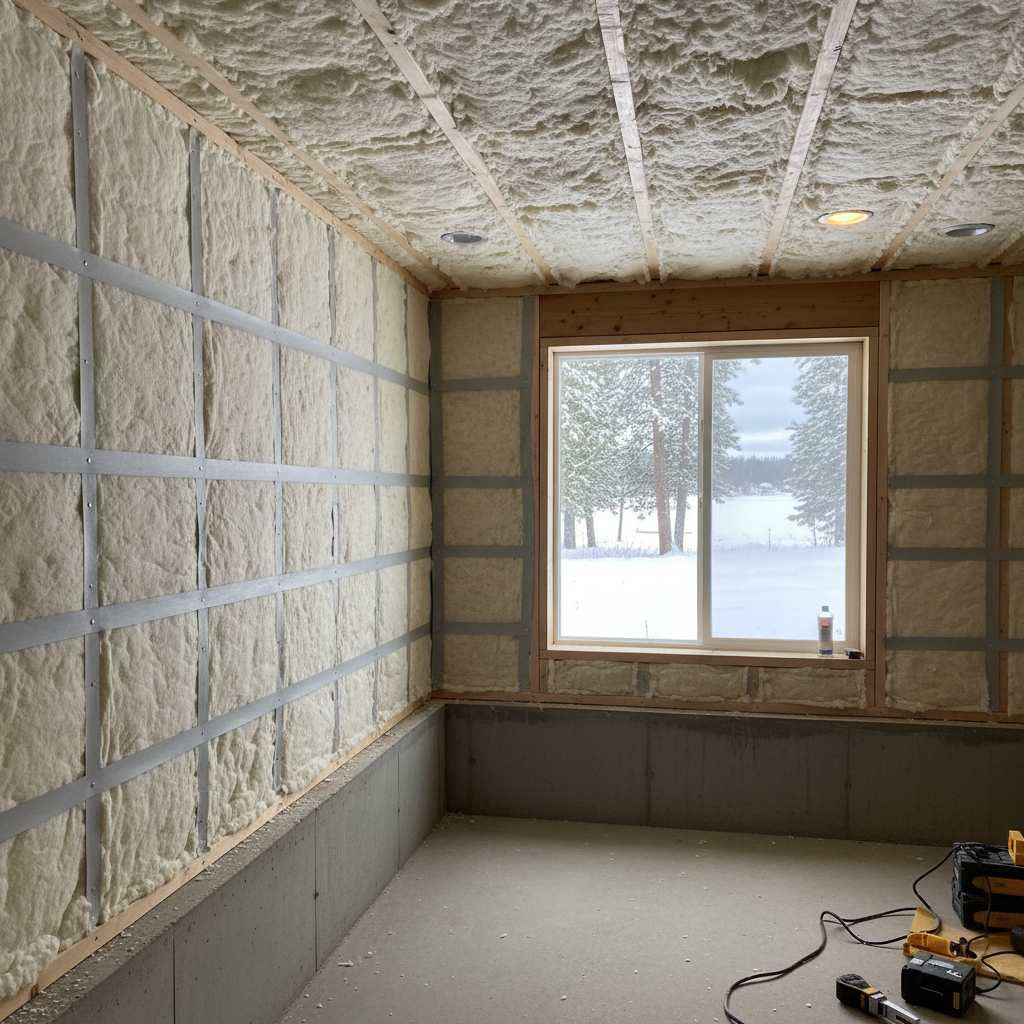
I've seen people try to go cheap with unfaced fiberglass batts in a basement. They think they're saving money, but they're really just setting themselves up for failure. You need insulation that can handle potential moisture, won't fall apart if it gets damp, and provides a good thermal break. Rigid foam boards (like XPS or EPS) or closed-cell spray foam are often your best bets for direct contact with concrete. They act as vapor barriers and thermal breaks, which is exactly what you want here. Open-cell spray foam can work too, but it needs a specific setup to manage vapor, usually with a separate vapor barrier on the warm side. Talk to someone who understands the local climate and building science, not just someone who's pushing the cheapest product they have.
Mistake #3: Not Considering Radon Mitigation Upfront
Okay, this isn't strictly an insulation mistake, but it's a huge oversight when you're planning a basement project, and it connects directly. Radon is a naturally occurring radioactive gas that can seep into your home from the soil. It's odorless, colorless, and a serious health risk. And guess what? McCall, like many areas with granite bedrock, can have elevated radon levels. If you're sealing up your basement with new insulation, you're also potentially trapping radon.
Before you insulate, get a radon test. They're cheap and easy to do yourself. If your levels are high, you'll want to put in a mitigation system. It's much, much easier and cheaper to install a radon system *before* you finish and insulate your basement. Trying to retrofit one after everything is sealed up is a real pain and will cost you more. A good contractor, like us at McCall Insulation, will bring this up, but it's on you to be aware and ask the question.
Mistake #4: Hiring the Cheapest Bid Without Asking the Right Questions
Everyone wants a good deal, I totally get it. But when it comes to something as critical as basement insulation, the cheapest bid can often end up being the most expensive in the long run. I've seen bids come in super low because the contractor isn't planning to do the necessary prep work, or they're using an inferior product, or they're just not experienced with basement systems in our climate.
Here's what you need to ask:
- How will you deal with potential moisture?
- What type of insulation are you suggesting, and why is it the right choice for my basement and our climate?
- Do you have experience with radon mitigation systems, or can you recommend someone?
- Are you licensed and insured? Can I see proof?
- Can you give me references from other basement insulation jobs you've done in McCall?
Don't just look at the bottom line. Look at the scope of work, the materials, and the contractor's experience. A reputable company won't shy away from these questions. In fact, they'll welcome them because they know they do good work.
Mistake #5: Forgetting About Air Sealing
Insulation is only part of the equation, you know? Air sealing is just as, if not more, important. Cracks and gaps in your foundation, around rim joists, and where pipes and wires poke through the walls are like tiny open windows. They let cold air in and warm air out. You could have the best R-value insulation in the world, but if your basement isn't air-sealed, you're still losing heat and inviting moisture problems.
A good basement insulation job includes careful air sealing. This means using caulk, foam sealants, and sometimes even rigid barriers to stop air movement. It's often overlooked by less experienced contractors, but it makes a massive difference in comfort and energy efficiency. Make sure it's explicitly part of the plan.
Look, insulating your basement is a great investment for your McCall home. It'll make your whole house more comfortable, save you money on heating, and even improve indoor air quality. Just make sure you're doing it right the first time. Ask questions, do your homework, and don't cut corners. Your future self will definitely thank you.