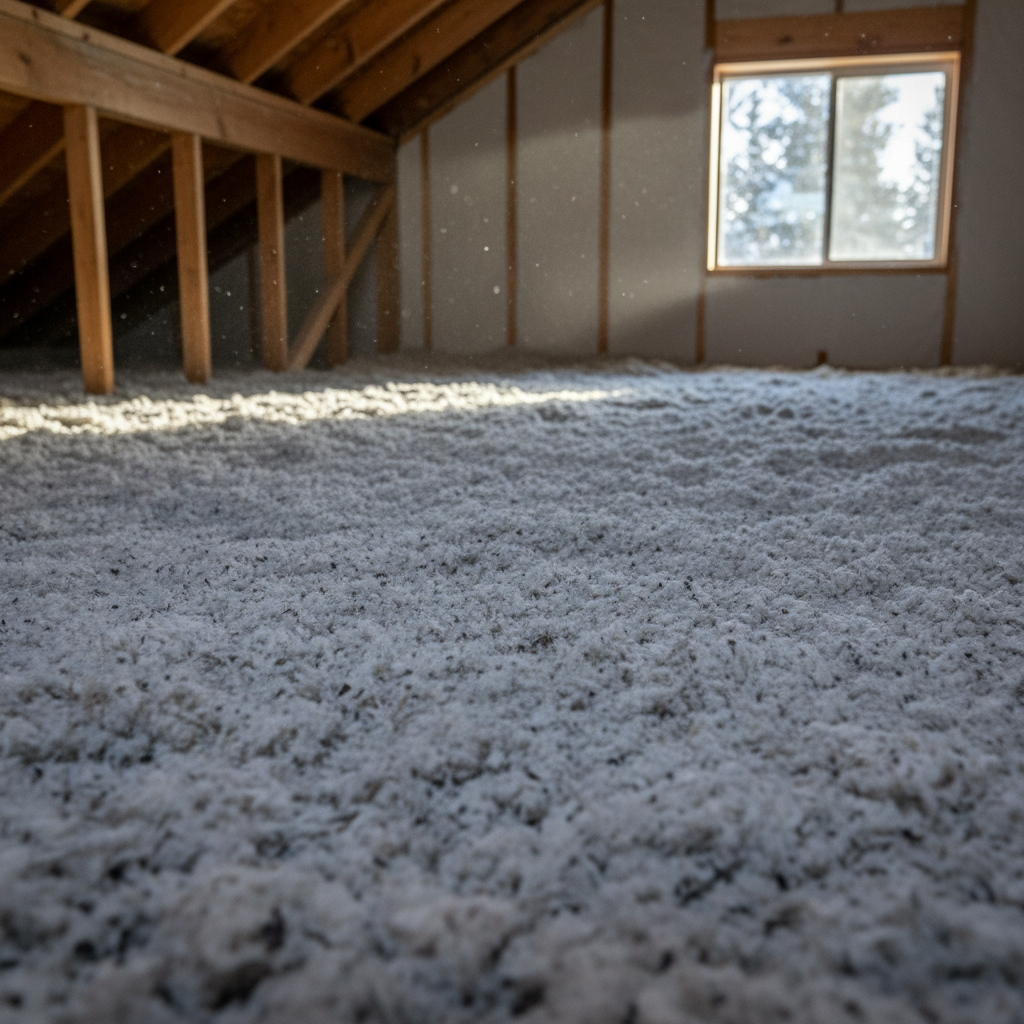
What exactly is blown-in insulation?
Alright, let's start with the basics. When I talk about blown-in insulation, I'm usually referring to either cellulose or fiberglass. We install it using a big machine. We feed the material into a hopper, then a powerful blower pushes it through a long hose, typically up into your attic or into wall cavities. It comes out fluffy, almost like a snowstorm, and fills every nook and cranny. Unlike those big, pre-cut batts you see, blown-in insulation just conforms to irregular spaces. Think around wires, pipes, and all those little framing imperfections. That's a big deal for keeping heat where it belongs, especially with our McCall winters, don't you think?
Is blown-in insulation effective for McCall's cold climate?
You bet it is. For our climate here in McCall, where we get serious cold and heavy snow loads, blown-in insulation works incredibly well. The key is how it creates a seamless thermal blanket. No gaps, no voids, which means fewer pathways for heat to escape in winter or sneak in during the summer. I've seen countless homes in the area, from the older cabins near Payette Lake to the newer builds up in Spring Mountain Ranch, where adding a good layer of blown-in insulation in the attic made a night-and-day difference in comfort and heating bills. It helps prevent those ice dams too, by keeping your attic cold and your roof deck uniformly chilly.
What's the R-value of blown-in insulation, and how much do I need?
R-value is just a fancy way of saying how well insulation resists heat flow. A higher R-value means better insulation, simple as that. For blown-in, both cellulose and fiberglass offer good R-values. Cellulose usually comes in around R-3.5 to R-3.8 per inch, while blown-in fiberglass is typically R-2.2 to R-2.7 per inch. Now, how much you need? That depends on where it's going. For attics in McCall, the general recommendation is usually R-49 to R-60, which often means 16-20 inches of blown-in material. For walls, it's usually R-13 to R-21, depending on the cavity depth. We always aim for at least the current energy code, but often recommend going a bit higher, especially in attics, because it pays for itself pretty quick.
Is it messy to install? What about dust?
Look, any construction work creates some mess, but we do everything we can to minimize it. When we're blowing insulation, especially in an attic, there's a certain amount of dust that gets stirred up. That's just a fact of the job. We use tarps, seal off doorways, and run ventilation to keep it contained. The good news is, once it's in place, it settles down. As for dust in the house afterward, it's usually pretty minimal if we do our job right. We're not just blowing it in and leaving; we're careful about cleanup. It's not like a fine powder that's going to coat everything for weeks.
How does blown-in compare to batt insulation for cost and performance?
This is a common question, and a good one. Generally, blown-in insulation can be more cost-effective to install than batts, especially in attics or hard-to-reach areas. The material itself might be comparable, but the labor to cut, fit, and seal batts perfectly is often higher. Performance-wise, blown-in usually wins out, especially in older homes or homes with complex framing. Batts are great in perfectly uniform spaces, but let's be honest, how many homes are truly perfect? Blown-in fills all those little gaps and voids that batts can miss, eliminating thermal bridges and creating a more consistent R-value across the entire surface. That means better overall performance and fewer cold spots.
Can blown-in insulation help with soundproofing?
Yeah, it can definitely help. While it's not specifically designed as a soundproofing material like some specialized acoustic panels, the density and fibrous nature of blown-in insulation do a pretty good job of absorbing sound. If you've got noisy neighbors, or you're trying to dampen sound between rooms, adding blown-in into wall cavities or between floor joists can make a noticeable difference. It won't make your house soundproof like a recording studio, but it'll certainly reduce sound transmission and make your home feel quieter and more peaceful. It's a nice side benefit to the thermal performance.
What about pests or moisture with blown-in insulation?
This is a valid concern, especially in a place like McCall where we have our fair share of critters and moisture. Modern blown-in cellulose is often treated with borate, which is a natural fire retardant and also acts as a deterrent for insects and rodents. They generally don't like to nest in it. As for moisture, that's more about proper ventilation and sealing than the insulation itself. If you've got a leaky roof or serious condensation issues, insulation isn't going to fix that. In fact, wet insulation, no matter the type, loses its R-value. We always make sure the area is dry and properly ventilated *before* we blow in insulation. That includes checking for proper attic venting and making sure there are no existing moisture problems. We're not just insulation guys; we're looking at the whole picture to make sure you get a long-lasting, effective solution from McCall Insulation.