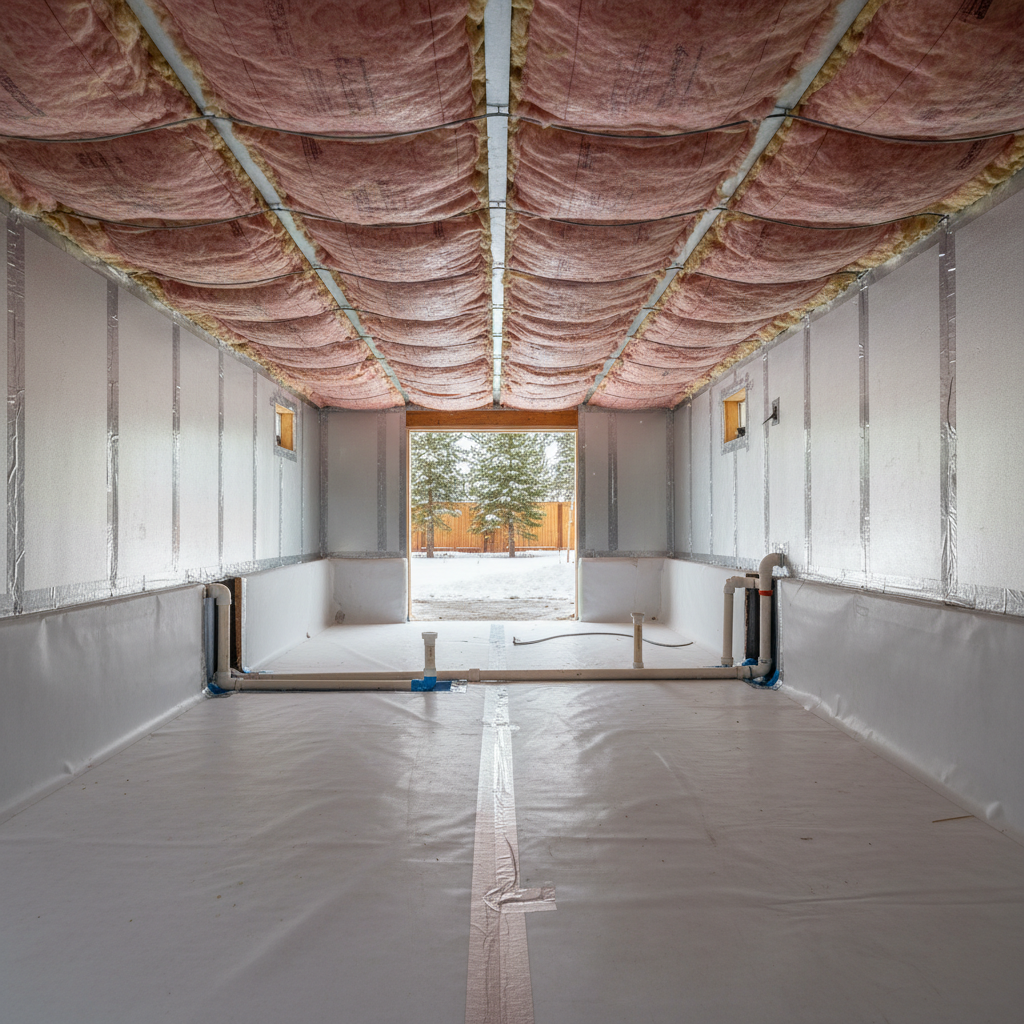
Alright, let's talk crawl spaces. Specifically, what not to do when you're thinking about insulating that often-forgotten area under your house. I've been doing this a long time here in McCall, and I've seen homeowners make some pretty common blunders that end up costing them more in the long run. You want to avoid regret, right? So, let's get into it.
Mistake #1: Not Knowing What Kind of Crawl Space You Even Have
This might sound basic, but you'd be surprised. Is it vented? Is it sealed? Is it damp? Or is it full of old construction debris? You can't just slap some insulation up and call it a day without understanding the environment you're working with. A vented crawl space, common in older homes up by Payette Lake, needs a different approach than a sealed one. If you've got vents open to the outside, you're basically trying to heat or cool the great outdoors. That's a waste of money and effort, pure and simple. You need to know if you're dealing with a vented system that needs to be properly sealed and conditioned, or if you're just trying to add R-value to an already sealed space. Get down there, or have someone who knows what they're looking at, take a good look before you even think about materials.
Mistake #2: Choosing the Wrong Insulation Material for the Job
This is a big one. Not all insulation is created equal, especially for crawl spaces. I often see folks trying to use fiberglass batts in a damp crawl space. Guess what? Fiberglass is like a sponge. It absorbs moisture, sags, loses its R-value, and becomes a perfect breeding ground for mold and mildew. Plus, it's a feast for rodents. You'll end up with a mess, and you'll have to rip it all out later. For McCall's climate, where we get significant snowmelt and sometimes damp conditions, you need something that can handle moisture. Rigid foam boards or closed-cell spray foam are usually your best bet. They don't absorb water, they provide a good vapor barrier, and they're much more resistant to pests. Don't just go for the cheapest option you see at the big box store; it's almost never the right choice for a crawl space.
Mistake #3: Ignoring Moisture and Air Sealing First
Insulation's job is to slow down heat transfer. If you've got a leaky, damp crawl space, insulation alone won't fix your problems. You're just putting a band-aid on a gaping wound. Before any insulation goes in, you absolutely have to address moisture issues. That means a proper vapor barrier (at least 6-mil poly) laid down on the ground, sealed at the seams and up the piers. It means sealing off any vents to the outside if you're converting to a conditioned crawl space. It means air-sealing all those gaps and cracks where the foundation meets the subfloor. I've seen plenty of homes where folks installed new insulation only to have it fail because they skipped these critical steps. You'll still have cold floors, high energy bills, and potential mold issues if you don't tackle moisture and air leakage first. Think of it this way: you wouldn't put a warm coat on a person who's soaking wet and standing in a draft, would you? Same principle applies here.
Mistake #4: DIYing When You Shouldn't
Look, I'm all for homeowners being handy. But crawl spaces are often tight, dirty, and frankly, not fun places to work. There are also safety considerations – proper ventilation, respirators, and knowing how to handle materials, especially if you're thinking about spray foam. I've seen DIY jobs where the vapor barrier wasn't sealed right, insulation was installed backwards, or gaps were missed entirely. It's not just about putting stuff up; it's about doing it correctly so it actually performs. If you're not comfortable with confined spaces, dealing with potential pests, or understanding the nuances of air sealing and vapor barriers, it's probably best to call in the pros. We've got the gear, the experience, and we know the local building codes. Sometimes, saving a few bucks upfront ends up costing you double down the line when you have to hire someone like McCall Insulation to come fix a botched job.
Mistake #5: Forgetting About Pest Control
This one ties into a few other points, but it's worth its own mention. Crawl spaces are prime real estate for rodents, insects, and other critters, especially in our neck of the woods. If you're going to invest in insulating, you need to make sure you're not just creating a cozy new home for them. This means sealing up any entry points, using materials that aren't attractive to pests (like rigid foam over fiberglass), and making sure your vapor barrier is intact and sealed. I've seen perfectly good insulation torn to shreds by mice looking for nesting material. Address pest control proactively, not as an afterthought.
So, there you have it. Don't fall into these traps. Do your homework, understand your space, pick the right materials, and don't be afraid to ask for help if you need it. Your home will be warmer, your energy bills lower, and you'll avoid a whole lot of headaches.