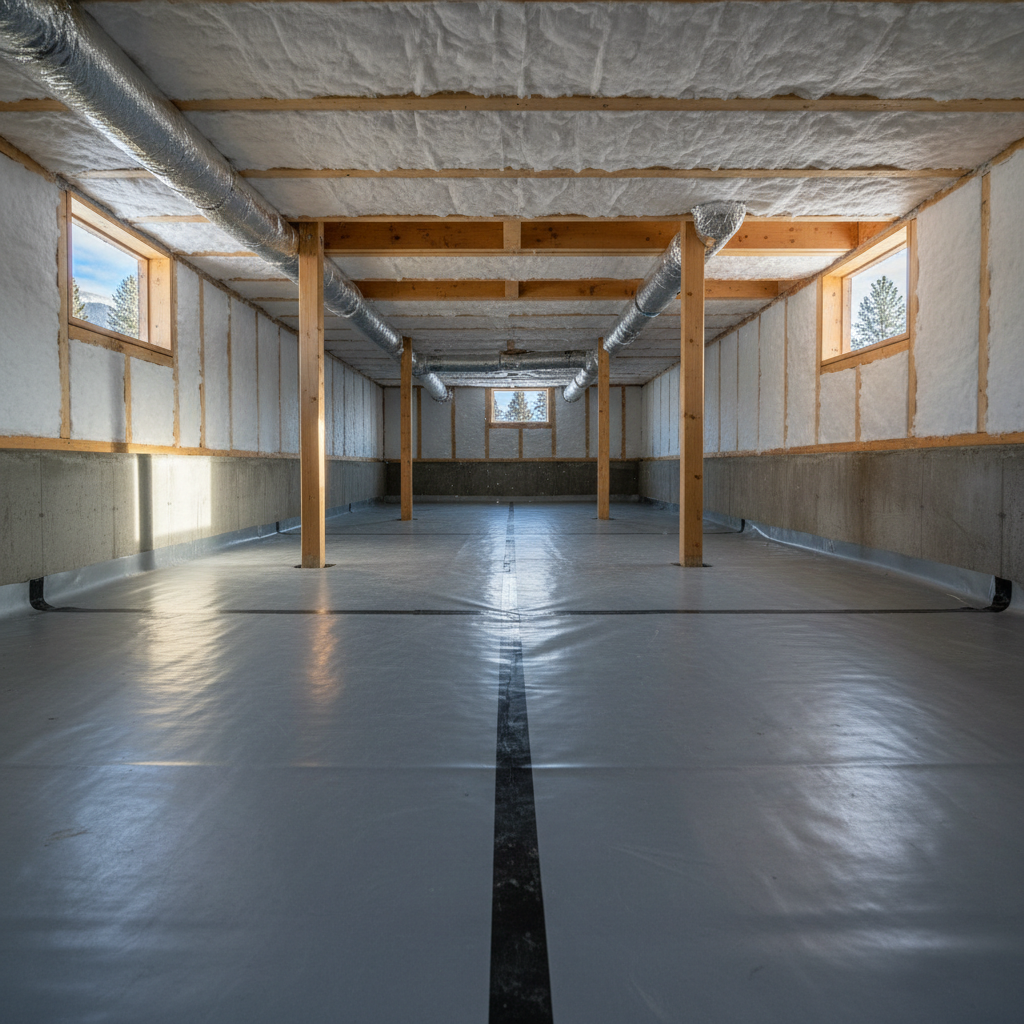
Alright, let's talk crawl space insulation. It's not the sexiest topic, I know, but it's one of those things that makes a huge difference in your home's comfort and your energy bills, especially up here in McCall. People always ask me, "How much does this really cost?" And while I can't give you a single magic number without seeing your place, I can definitely give you a solid idea of what affects pricing, what you should expect, and how to avoid getting ripped off.
What Drives the Cost?
A few big factors really push the price up or down. You've got to consider these when you're looking at quotes:
- Size of Your Crawl Space: This is a no-brainer, right? Bigger space means more material and more labor. We usually measure in square feet.
- Type of Insulation: This is a big one. Are we talking about basic fiberglass batts, blown-in cellulose, or rigid foam board? Each has its own cost per square foot, R-value, and installation complexity. Spray foam is another option, but it's usually the most expensive upfront.
- Existing Conditions: Is your crawl space clean and easy to access? Or is it a spider-infested swamp with old, moldy insulation we have to remove first? Removal of old insulation, especially if it's wet or rodent-damaged, adds significant time and disposal costs. If there's standing water or major moisture issues, those need to be addressed before insulation even starts.
- Vapor Barrier Needs: A good vapor barrier on the ground is crucial up here, especially with our heavy snowmelt and the clay soils common around Payette Lake. If you don't have one, or if it's torn up, adding or replacing it will be part of the job.
- Air Sealing: Just insulating isn't enough if you've got drafts. Sealing up gaps and cracks in the rim joists and around penetrations (like plumbing or electrical lines) is critical. This is often done with caulk or spray foam and adds to the labor.
Typical Cost Ranges in McCall
Okay, let's get down to some numbers. Again, these are averages, but they should give you a good ballpark.
- Basic Fiberglass Batts (Floor Joists): If your crawl space is dry and relatively clean, and you're just looking for basic R-19 or R-30 fiberglass batts installed between the floor joists, you're probably looking at anywhere from $1.50 to $3.00 per square foot. This is the most common and often the most budget-friendly option.
- Blown-in Cellulose (Floor Joists): For a similar R-value, cellulose might run you $2.00 to $4.00 per square foot. It's great for filling irregular spaces and often has better air-sealing properties than batts.
- Rigid Foam Board (Walls/Perimeter): If we're insulating the crawl space walls to create a semi-conditioned space (which I often recommend for better performance and moisture control), rigid foam board can cost $4.00 to $7.00 per square foot of wall surface. This is a more involved process.
- Spray Foam (Walls/Perimeter): This is the Cadillac option. It's fantastic for air sealing and R-value, but it's pricey. Expect $6.00 to $10.00+ per square foot of wall surface.
- Vapor Barrier Installation/Replacement: If you need a new 6-mil or 10-mil vapor barrier, factor in an additional $0.75 to $1.50 per square foot of ground coverage.
- Old Insulation Removal: This varies wildly depending on how bad it is. It could be an extra $500 to $2,000+ for a typical McCall home, especially if it's full of rodent droppings or mold.
So, for an average 1,500 square foot home, a basic fiberglass batt installation might be $2,250 to $4,500. If you're doing a full encapsulation with rigid foam, new vapor barrier, and air sealing, you could easily be looking at $7,000 to $15,000 or more, especially if there's removal involved. It's a range, but it's an investment that pays off.
What Should Be in Your Quote?
When you get a quote from McCall Insulation (or anyone else), make sure it's detailed. It should clearly spell out:
- Square footage being insulated (floor or walls).
- Type of insulation and its R-value.
- Materials used (e.g., fiberglass batts, rigid foam, vapor barrier thickness).
- Labor costs, often included in the per-square-foot price.
- Any prep work like old insulation removal, debris cleanup, or minor repairs.
- Air sealing details (e.g., rim joists, penetrations).
- Vapor barrier installation (if applicable).
- Warranty information for materials and labor.
- Permit costs (if required, though often not for just insulation).
A good quote won't just say "insulate crawl space." It'll tell you exactly what you're getting.
How to Avoid Overpaying
Nobody wants to throw money away. Here's my advice:
- Get Multiple Quotes: This is a no-brainer. Get at least three detailed bids. Don't just compare the bottom line; compare what's included.
- Ask for References: A good contractor will have happy customers. Call them. Ask about the process, cleanup, and if they'd hire them again.
- Understand the Scope: Make sure each quote is for the same scope of work. One guy might quote just batts, another might include a full encapsulation. You can't compare apples to oranges.
- Check Licenses and Insurance: Make sure anyone working on your home is properly licensed and insured. It protects you if something goes wrong.
- Don't Go for the Absolute Cheapest: The lowest bid often means corners are being cut, either in materials or labor. You don't want to redo this job in a few years because someone used cheap stuff or didn't install it right.
- Ask About Warranties: What kind of guarantee do they offer on their work and the materials?
Insulating your crawl space is a smart move for your home's health and your wallet. It's not just about keeping the cold out in winter; it's about managing moisture, improving air quality, and keeping your floors from feeling like ice blocks. Do your homework, ask the right questions, and you'll get a solid job done that lasts.