Walking across your living room floor on a January morning in McCall, ID can sometimes feel like standing on an ice cube. That cold usually starts right beneath your feet in the crawl space. Dealing with this part of your house is not glamorous, but ignoring the crawl space will cost you in high heating bills and frozen pipes.
Before You Start Crawling Around
Homeowners in McCall need to know what they are getting into before opening that crawl space door. Grab a flashlight and a dust mask and take a look down there. Is the crawl space bone dry, or is there standing water?
- Check for plumbing leaks or standing puddles that need fixing first.
- Look at the current Crawl Space Insulation to see if it is sagging or soaked.
- Measure the height so you know if you will be working on your belly or your knees.
If you have standing water or major drainage issues under your Bear Basin cabin or intown home, stop right there. Putting new Crawl Space Insulation over wet dirt is a recipe for mold and rot. Fix the drainage outside and seal up the ground moisture with a heavy-duty vapor barrier before you touch a single batt of Crawl Space Insulation.
What You Can DIY
If your crawl space is relatively dry and easy to move around in, you can handle some of the prep work yourself to save a bit of cash. You can lay down that 6-mil poly vapor barrier over the dirt floor, overlapping the seams and taping them securely. You can also clean out old, fallen fiberglass batts that mice have chewed through.
Some homeowners try to staple new fiberglass batts up between the floor joists themselves. Working in the crawl space is messy, miserable work, and gravity is not your friend. If you do choose the DIY route for Crawl Space Insulation batts, make sure you use supports like wire rods or twine to keep them from sagging down into the dirt over time.
When to Call the Pros
There comes a point where DIY turns into a very difficult chore. Working in a cramped, dusty space with itchy materials gets old fast. That is usually when people call McCall Insulation for professional Crawl Space Insulation services.
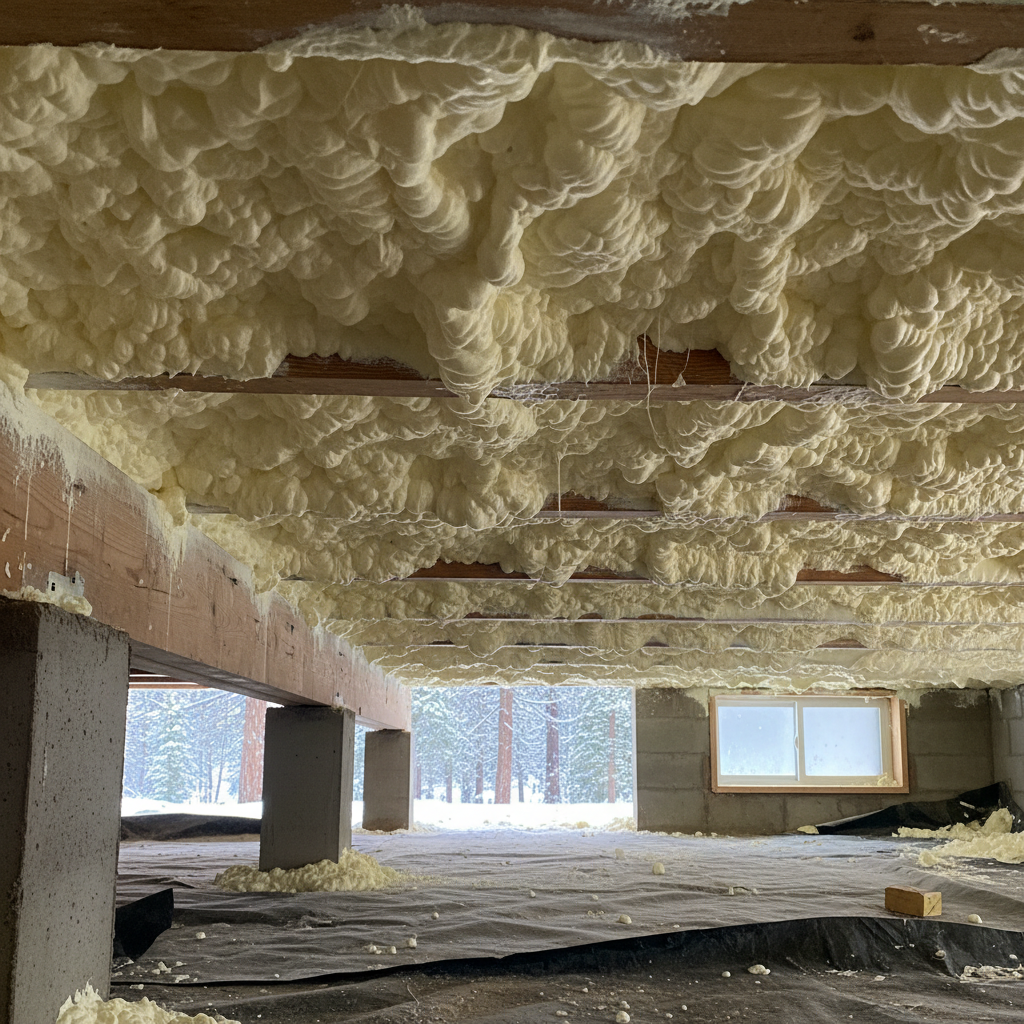
McCall Insulation typically recommends switching away from sagging fiberglass in mountain climates anyway. Spray foam or rigid foam board handles the harsh winters and moisture swings much better than traditional batts. If you want to encapsulate the crawl space entirely—sealing the vents and insulating the foundation walls instead of the ceiling—you will want professional grade materials and installation from McCall Insulation.
After the Project Is Done
Once the work is finished, do not just lock the access door and forget it. Check on your crawl space a few weeks later, especially after a heavy spring melt or a deep freeze. Make sure your pipes stay warm, your floors feel better, and the humidity levels down below stay stable. A little attention to this neglected space makes your whole house comfortable through the worst of the McCall winter.