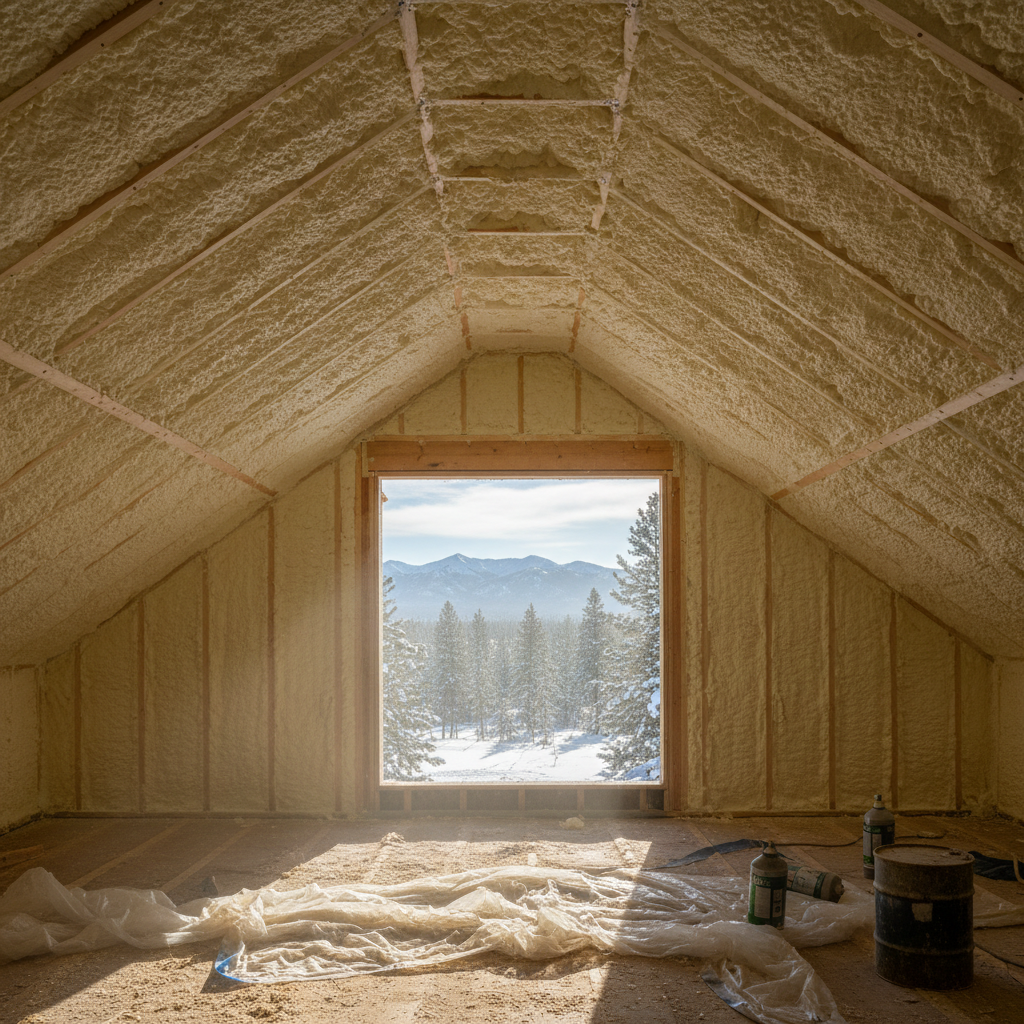
Alright, let us talk about closed cell spray foam here in McCall. You are looking to insulate your home, and you have probably heard a lot about how effective closed cell spray foam can be, especially with our tough McCall winters and warm McCall summers. It is a fantastic product, but getting it installed right and making sure it performs for decades means understanding a few things about our local McCall climate and how it impacts the work for your McCall home.
When to Schedule Your Closed Cell Spray Foam Installation in McCall
When is the best time to get this closed cell spray foam installation done for your McCall home? Generally, spring and early fall are your sweet spots for spray foam application in most places, and that holds true for us here at McCall Insulation too. Here in McCall, that means aiming for those months when the temperatures are more moderate – think late April through June, and then September through October. During these times, the ambient air and surface temperatures are usually within the ideal range for the closed cell spray foam to cure properly for your McCall property.
Why not winter for your McCall closed cell spray foam project? Well, our McCall winters are no joke. Average lows can hit 13 degrees in January here in McCall, and we get a ton of snow. While it is technically possible to spray foam in colder weather, it adds a lot of complications. The closed cell spray foam materials need to be kept warm, and the surfaces we are spraying onto (the substrate) also need to be within a specific temperature range, typically above 50°F (10°C). Trying to heat a whole attic or crawl space to that temperature when it is 10 degrees outside is a big undertaking for a McCall closed cell spray foam installation. It can lead to issues like poor adhesion, reduced expansion, and even brittle foam if it gets too cold during curing. Plus, if the substrate is too cold, the hot foam hitting it can cause condensation, which is exactly what we are trying to avoid with closed cell spray foam in McCall.
Summer can be a bit tricky too for closed cell spray foam in McCall, especially when we get those stretches of 80-degree days or higher. While the foam components themselves might need to be heated to 110-130°F, if the ambient or substrate temperature gets too high, the foam can react too quickly, shortening its working time and potentially affecting adhesion. We are always monitoring these conditions closely here at McCall Insulation, but scheduling your closed cell spray foam in the shoulder seasons often gives us the most predictable and ideal environment for a perfect application for your McCall home.
Weather Conditions That Affect the Closed Cell Spray Foam Work in McCall
Beyond just temperature, there are a few other weather factors we pay close attention to for closed cell spray foam installations here in McCall:
- Humidity: Spray foam cures by a chemical reaction, and humidity plays a role. Too much humidity (over 80-85% relative humidity) can negatively affect the foam's performance and physical properties. Too little can slow down the curing process for the closed cell spray foam. We aim for a relative humidity between 40% and 70% during application for closed cell spray foam in McCall. McCall's summers are generally dry, but our wetter season runs from October to June.
- Moisture: This is a big one for closed cell spray foam in McCall. Any moisture on the surface we are spraying – rain, dew, frost, or even just dampness – can seriously mess with how the foam adheres. We need clean, dry surfaces for optimal performance of the closed cell spray foam. That is why we are not out there spraying right after a big rain or if there is frost on the sheathing for your McCall home.
- Wind: High winds can also be an issue for closed cell spray foam application in McCall. They can retard the exothermic reaction of the foam, leading to poor adhesion, increased density, and a loss of yield. It also makes containing the spray tricky, which is not good for anyone.
So, when you call McCall Insulation for your closed cell spray foam needs, you are not just getting guys who show up with a sprayer. You are getting folks who understand the science behind the closed cell spray foam product and how it interacts with our specific McCall climate. We will assess your McCall home and the current conditions to make sure we are setting ourselves up for success with your closed cell spray foam installation.
Protecting Your Closed Cell Spray Foam Investment Year-Round in McCall
Once closed cell spray foam is in your McCall home, it is a powerhouse. It is dense, moisture-resistant, and creates an air-impermeable barrier that helps prevent condensation and mold growth. It is also a Class II vapor retarder, which is great for moisture management. But even the best insulation, like closed cell spray foam, benefits from a little homeowner awareness here in McCall.
- Ventilation is Still Key: While closed cell spray foam creates a tight seal in your McCall home, proper ventilation in your home is still important for overall indoor air quality. Think about your kitchen and bathroom fans – use them!
- Address Leaks Promptly: Closed cell spray foam is highly water-resistant, and some types are even considered flood-damage resistant by FEMA. However, no insulation is a substitute for a sound roof or plumbing in your McCall home. If you have a leak, get it fixed right away. Even though the closed cell foam will not absorb water like other materials, continuous water intrusion can still lead to other issues in your home's structure.
- Monitor Indoor Humidity: We recommend keeping your indoor humidity levels between 30-50% relative humidity in your McCall home. This prevents mold growth and keeps things comfortable. In our dry McCall summers and cold, dry McCall winters, this usually is not a huge problem, but it is good to be aware of, especially if you have a lot of indoor plants or humidifiers running.
- Regular Home Maintenance: Just like any other part of your McCall home, regular checks on your roof, siding, and foundation will help protect your closed cell spray foam insulation investment. Catching small issues before they become big ones ensures your closed cell foam can do its job effectively for its entire lifespan, which can be 80-100 years.
Closed cell spray foam is one of the best investments you can make for your McCall home's energy efficiency and comfort. By understanding when and how it is best installed for your McCall property, and taking a few simple steps to maintain your home, you will enjoy the benefits of closed cell spray foam for decades to come.