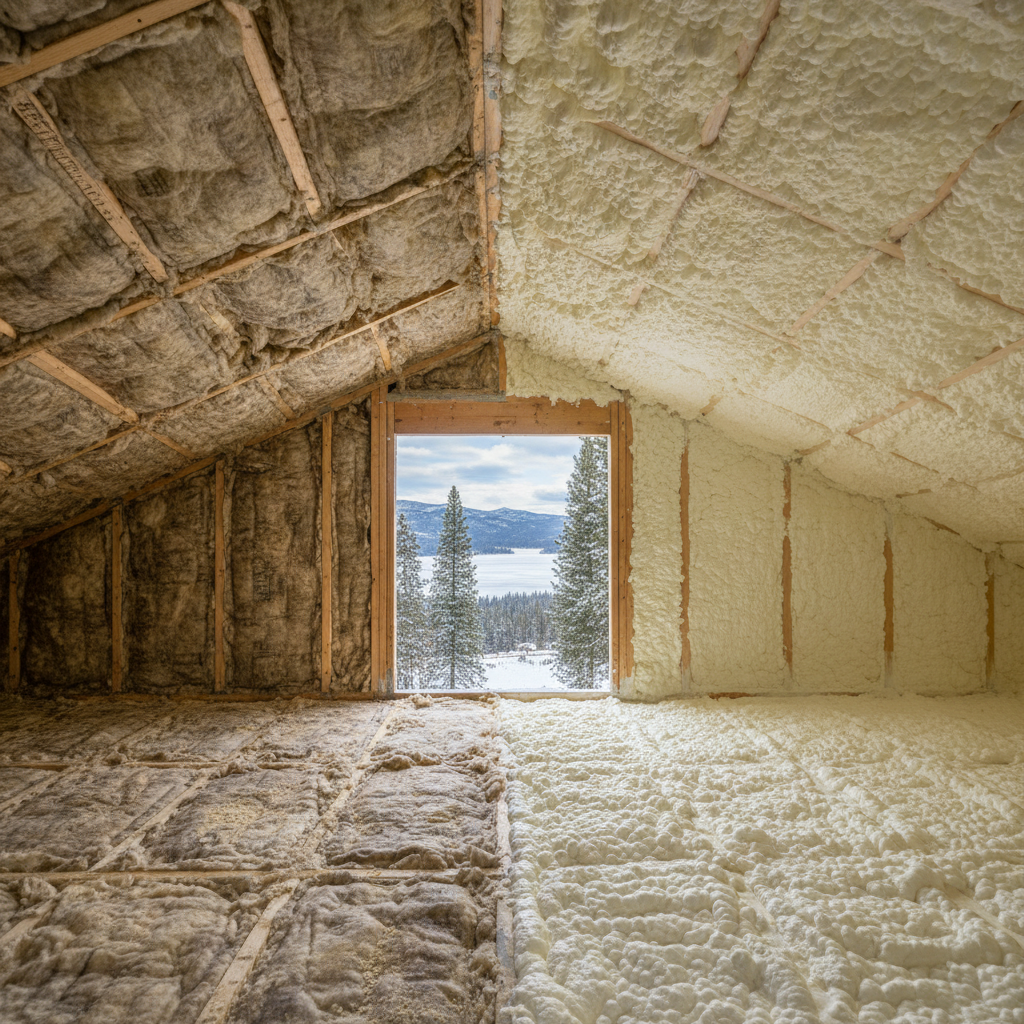
Alright, let's talk open cell spray foam. It's a great product, especially up here in McCall where we deal with some serious cold and then some pretty warm summers. But when you're looking at putting it in your attic space, there are usually two main ways folks think about doing it: spraying it on the attic floor, or spraying it directly to the underside of your roof deck, between the rafters. Both have their place, but they're not the same deal, and one usually makes more sense for most homes around here.
Attic Floor Application: The Traditional Approach
This is what most people picture when you say "attic insulation." We're talking about spraying the open cell foam right on the floor of your attic, directly over your ceiling joists. It creates a nice, thick blanket that seals off your living space from the unconditioned attic above.
Pros:
- Cost: Generally, it's cheaper upfront. You're usually dealing with less square footage to cover compared to the roof deck, and you're not insulating the whole attic space, just sealing off the conditioned envelope.
- Simplicity: It's a pretty straightforward application. We're just covering the floor, making sure to get into all the nooks and crannies around light fixtures, plumbing stacks, and electrical boxes.
- Existing Attic Storage: If you've got a bunch of stuff stored up there and you don't want to move it all, this might be an easier route. We'll work around what's there, though clearing it out is always best for a thorough job.
Cons:
- Attic Temperature: Your attic still gets hot in the summer and freezing cold in the winter. That means anything stored up there is exposed to those extreme temperatures. Think about those old photo albums or electronics – they don't love big temperature swings.
- Ductwork Issues: If your HVAC ducts are up in the attic, they're still running through an unconditioned space. Even if they're insulated, they're working harder, losing efficiency, and costing you more on your energy bills. This is a big one for older homes in McCall, especially those built in the 70s and 80s out towards Spring Mountain, where ducts often run through the attic.
- Ice Dams: While proper attic floor insulation helps, if you've got a poorly ventilated attic, you can still be at risk for ice dams. The heat from your living space can escape into the attic, warm the roof, melt snow, and then refreeze at the eaves.
Rafter Application: Creating a Conditioned Attic
This is where we spray the open cell foam directly to the underside of your roof sheathing, between the rafters. It essentially brings your attic space *inside* your home's conditioned envelope. The attic becomes part of your living space, even if you're not actively using it.
Pros:
- Energy Efficiency: This is where you see the biggest gains. Your attic becomes a conditioned space, so your ducts (if they're up there) are now running through a warm space in winter and a cool space in summer. That means less energy loss and lower utility bills.
- Comfort: No more extreme temperature swings in your attic. This makes for a more consistent temperature throughout your entire home. Plus, if you ever want to finish that attic space down the road, you're already halfway there.
- Storage Protection: Anything you store in the attic is now protected from the elements. No more worrying about things getting too hot or too cold.
- Ice Dam Prevention: By insulating the roof deck itself, you're preventing heat from escaping your home and melting snow on your roof. This significantly reduces the risk of ice dams forming, which is a huge benefit here in McCall with our heavy snowfalls.
- Sound Dampening: Open cell foam is also great for sound dampening. It can help quiet outside noise, which is a nice bonus.
Cons:
- Cost: It's usually more expensive upfront. You're covering a larger surface area, and the application can be a bit more involved, especially if there are lots of complex rooflines or obstructions.
- Ventilation Concerns: When you seal off the attic, you've got to make sure your ventilation is handled correctly. We're talking about bringing the attic into the conditioned space, so traditional attic vents become obsolete. You'll need to ensure proper air sealing and potentially consider things like fresh air intake if you're really buttoning things up tight.
My Recommendation for McCall Homes
Look, for most homes in McCall, especially with our climate, I'm going to lean towards spraying open cell foam on the underside of your roof deck, between the rafters. Yes, it's a bigger investment upfront, but the long-term benefits usually outweigh that initial cost.
Think about it: you're protecting your home from ice dams, making your HVAC system work more efficiently, and creating a comfortable, usable attic space. For McCall Insulation, we've seen firsthand the difference this makes in folks' energy bills and overall comfort. You're not just insulating; you're upgrading your home's entire performance.
If you've got a simple attic with no ducts up there and you just need to meet minimum R-value requirements, the attic floor might be fine. But if you're looking for maximum comfort, efficiency, and protection against our harsh winters and warm summers, conditioning that attic space is the way to go. It's an investment that pays off in comfort and savings year after year.