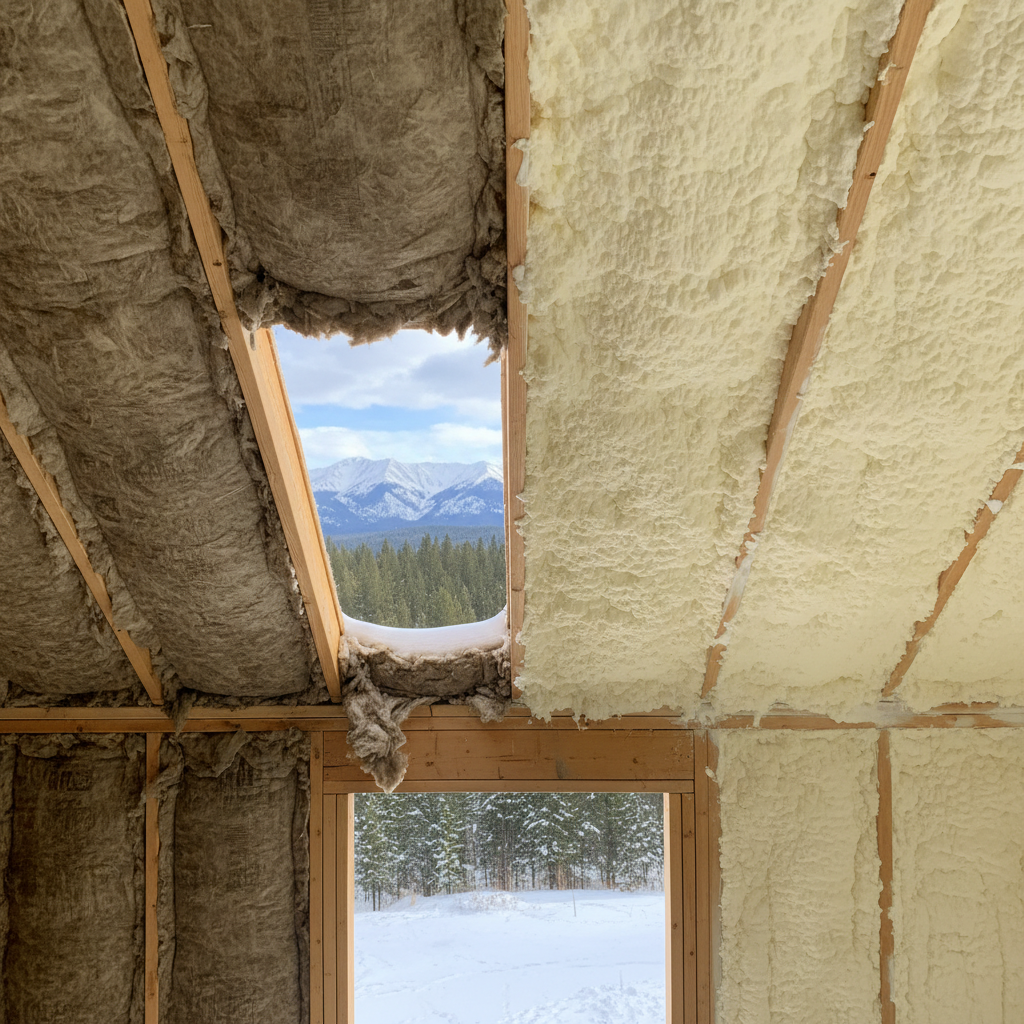
Open Cell Spray Foam: Two Ways to Get It Done in McCall
Alright, let's talk about open cell spray foam. You're probably looking into it because you want a warmer, more efficient home, especially with our McCall winters. It's great stuff, no doubt about it. But here's something I see folks sometimes get a little mixed up about: there are two main ways we put in open cell foam, and they're not quite the same. It's not just about the product itself, you see, but how it's installed and what that means for your house.
You've got what I call the 'Traditional' approach, and then there's the 'Flash & Batt' method. Both use open cell spray foam, but the way we apply them and the overall system are different. Let's break it down.
Traditional Open Cell Spray Foam: Full Cavity Fill
This is probably what most people picture when they hear 'spray foam.' We spray the open cell foam right into the wall or ceiling cavity until it completely fills the space. It expands and cures, creating a tight, airtight barrier.
Cost: Generally, this is the more expensive option upfront. You're paying for more material and the labor to apply it precisely, filling the entire cavity.
R-Value & Performance: When we do this right, you get the best thermal performance possible. Open cell foam usually has an R-value of around R-3.5 to R-3.7 per inch. So, if you've got a 2x6 wall (that's 5.5 inches deep), you're looking at an R-value of about R-19 to R-20. It's not just the R-value, though; it's the air seal. This method pretty much stops all air leakage, which makes a huge difference for comfort and your energy bills, especially when the wind's whipping off Payette Lake.
Air Sealing: This is where traditional open cell really shines. It molds itself to every nook and cranny, sealing off all those tiny gaps and cracks where air can sneak in and out. That means fewer drafts and better humidity control, too.
Sound Dampening: Open cell foam is excellent at soaking up sound. Filling the entire cavity helps deaden sound transfer between rooms or from outside. If you're building a new home and want a quiet space, this is a big plus, wouldn't you agree?
Durability & Maintenance: Once it's in, it's pretty much maintenance-free. It won't settle or sag over time like some other insulation types. It's stable.
Flash & Batt: A Hybrid Approach
The 'Flash & Batt' method is a combination. We spray a thinner layer of open cell foam – usually 1 to 2 inches – directly onto the sheathing or subfloor. This 'flashes' the surface, creating that crucial air seal. Then, we come back and install traditional batt insulation (fiberglass or mineral wool) on top of the cured foam to fill the rest of the cavity.
Cost: This is usually a more budget-friendly option than full-cavity spray foam. You're using less spray foam material, which is the more expensive part, and supplementing it with cheaper batt insulation.
R-Value & Performance: You still get a good R-value. For example, a 1-inch flash of open cell (R-3.7) combined with R-13 fiberglass batt in a 2x4 wall gives you a total R-value of around R-16. If you're in a 2x6 wall, a 2-inch flash (R-7.4) plus R-19 batt gets you around R-26. It performs very well, especially for walls.
Air Sealing: This is the main benefit of the 'flash' part. That thin layer of foam creates an excellent air barrier, stopping drafts and moisture movement just like full spray foam does. It's really effective at sealing up the house.
Sound Dampening: It's better than just batt insulation alone, but probably not as good as a full cavity fill of open cell. The batts help with sound, but the continuous foam layer is thinner.
Durability & Maintenance: Similar to traditional spray foam, the foam itself is durable. The batt insulation behind it will also perform as expected.
Which One Should You Pick for Your McCall Home?
So, which one's right for you? It really depends on your priorities and budget. Here's my take:
For Maximum Performance & Sound Control: If your budget allows, and you want the absolute best thermal performance, air sealing, and sound dampening – especially in a new build or major remodel – go with the traditional full-cavity open cell. It's an investment that pays off in comfort and lower energy bills for decades. This is often my recommendation for attics and rim joists, where you really want that complete seal.
For a Great Balance of Performance & Cost: Flash & Batt is a fantastic option, especially for exterior walls. You get the critical air seal from the foam, which is arguably the most important part of insulation performance, combined with good R-value from the batts, all at a more palatable price point. It's a smart way to get a high-performing envelope without breaking the bank. I've seen it work wonders in older homes around the Upper Payette Lake area, where you're trying to tighten things up without tearing everything apart.
At McCall Insulation, we work with both methods, and we're happy to walk through your specific project. We can help you figure out what makes the most sense for your house, your budget, and what you're trying to achieve. Don't hesitate to give us a call.